
Myopia Treatment & Management in Noida
Comprehensive Refractive Correction, Childhood Progression Control & Retinal Safeguards
Myopia treatment and management in Noida involves correcting blurred distance vision and, particularly in children and teenagers, keeping track of whether the eye power is increasing. Myopia, also known as short-sightedness, occurs due to the focusing of light in front of the retina rather than directly on the retina itself. As such, distant objects appear blurred while close objects remain clear.
At ARC Plastic Surgery & Oculoplasty in Sector 104, Noida, Dr. Ruchi Rai, Ophthalmologist & Oculoplasty Surgeon, offers comprehensive vision evaluation, cycloplegic pediatric refraction, and targeted myopia management.
For anyone looking for myopia treatment in Noida, myopia management in Noida, short-sightedness treatment, myopia control for children, eye power treatment, or an ophthalmologist in Noida, it is important to have a comprehensive vision test first to identify the exact type of myopia and how rapidly it is progressing.
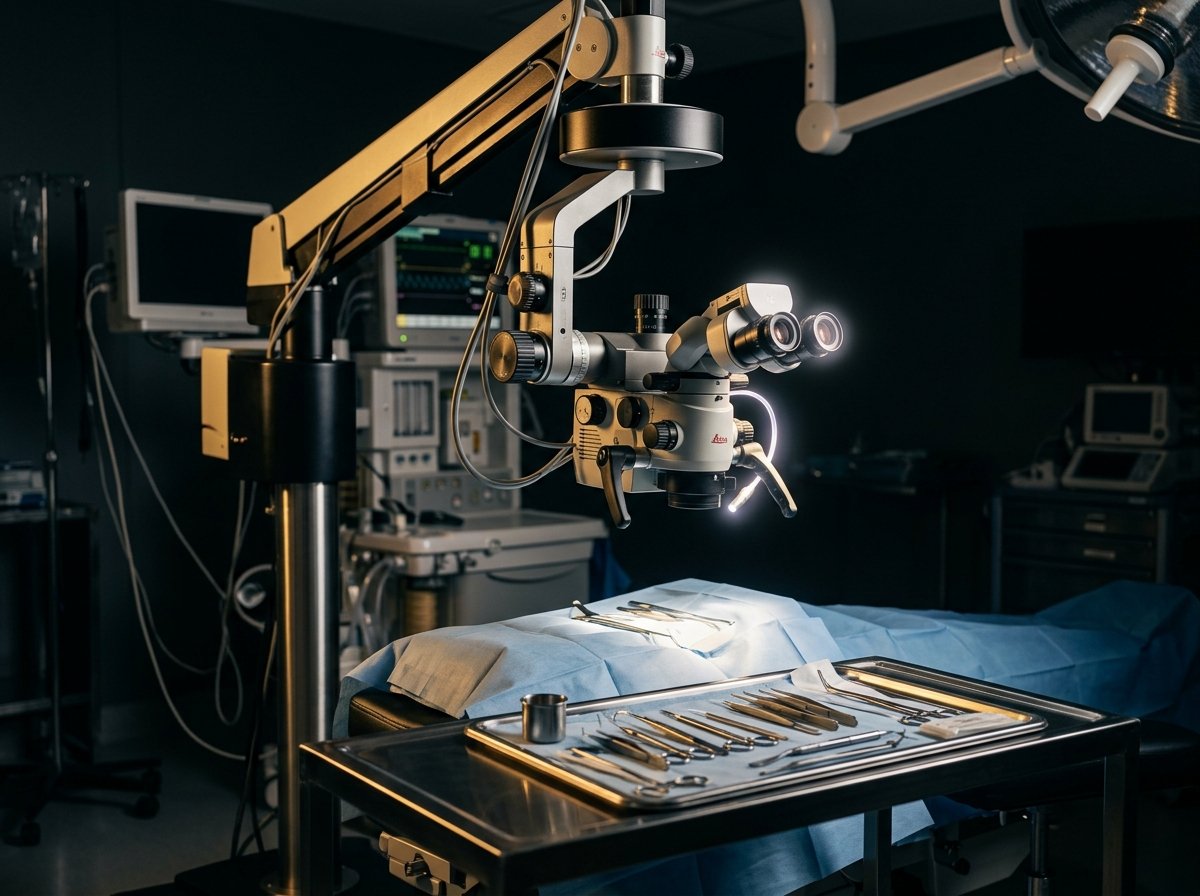

Myopia Correction vs. Myopia Control: The Crucial Difference
Myopia Correction (standard glasses or single-vision contact lenses) only helps a child see clearly in the present moment by shifting the focal point onto the retina. Myopia Control, on the other hand, actively works to slow down the abnormal physical elongation of the eyeball, preventing the power from climbing year after year and safeguarding your child against severe retinal risks later in life.
What Is Myopia (Short-Sightedness)?
Understanding the optical mechanics of short-sightedness and why progressive axial elongation poses lifetime eye health concerns.
How Myopia Occurs
In a normal eye, incoming light rays refract through the cornea and lens to land precisely on the retina, creating sharp vision. In myopia, the eyeball grows slightly too long from front to back (increased axial length), or the cornea is excessively curved.
As a result, light focuses in front of the retina rather than on it. Distant images become blurry, whereas close-up objects remain clear because divergent light from nearby items lands accurately on the retina.
- Onset in Childhood: Typically manifests between ages 6 and 14 as the human body experiences rapid growth spurts.
- Progression Through Teen Years: Continues advancing until early adulthood (age 18–21) when physical eye growth stabilizes.
- High Myopia Risks: Greater than −5.00D or −6.00D significantly stretches the delicate peripheral retina.
Why Children Need Special Focus
Children rarely complain that "my vision is blurred." Instead, they naturally adapt by moving closer to screens, squinting, or struggling with classroom blackboard visibility.
Early diagnosis ensures academic success, prevents amblyopia (lazy eye), and allows timely initiation of myopia-slowing therapies.
Common Symptoms & Behavioral Clues of Myopia
Recognizing subtle behavioral cues in children and common visual complaints in teenagers and adults.
Difficulty Seeing the Classroom Board
Struggling to read notes written on school blackboards or whiteboards, frequently copying work from peers sitting adjacent.
Sitting Unusually Close to the TV
Moving chairs directly in front of the television, holding mobile screens inches from the face, or leaning deep into reading books.
Frequent Squinting & Eye Narrowing
Squinting or partially closing eyelids creates a pinhole effect that momentarily sharpens distant blur, a classic subconscious tell of myopia.
Night Driving & Distance Blur in Adults
Difficulty reading road signboards, highway markers, or theater screens, accompanied by excessive glare or haloing during night driving.
Frontal Headaches & Visual Fatigue
Frequent dull forehead headaches or brow strain occurring after prolonged school hours, studying, or office work due to continuous squinting.
Rapidly Increasing Glasses Power
Needing stronger minus lenses every 6 to 12 months, indicating active, uncontrolled axial elongation of the eyeball.
Why Does Myopia Increase? Multifactorial Triggers
Myopia progression is driven by a complex interplay of genetic susceptibility, rapid developmental eye growth, and modern urban lifestyle habits.
Genetics & Parental History
If one parent has myopia, the child’s risk doubles; if both parents are myopic, the risk jumps by 5 to 6 times. Heredity strongly influences baseline scleral tissue elasticity and axial growth tendencies.
Intense Near-Work & Screen Demands
Continuous hours spent reading, studying, or using smartphones/tablets creates hyperopic peripheral defocus on the retina. The eye responds biologically by growing longer to bring peripheral rays into focus.
Limited Outdoor Daylight Exposure
Natural outdoor sunlight stimulates the release of retinal dopamine, an essential neurochemical transmitter that acts as a natural brake on excessive eyeball lengthening. Indoor living removes this protection.
Physical Growth Spurts
Just as height and limbs lengthen during puberty, the ocular globe also elongates. If scleral collagen is fragile, the eye stretches disproportionately during teenage development.
Structural Scleral Thinning
In progressive myopia, the biochemical composition of the scleral wall weakens, reducing resistance to normal intraocular pressure and allowing continuous axial stretching.
Suboptimal Reading Distance & Dim Light
Holding study materials closer than 25–30 cm, studying in poor ambient lighting, and slouching exacerbate accommodation lag, accelerating refractive errors.
Why Cycloplegic Refraction Is Essential in Children
Children possess an extraordinarily strong ciliary focusing muscle. Testing power without relaxing this muscle frequently results in over-prescribed, harmful glasses.
Unmasking "Pseudomyopia" with Cycloplegic Eye Drops
A child’s eye has immense focusing power called accommodation. When an optometrist checks a child’s power with a standard auto-refractometer without eye drops, the child’s focusing muscles involuntarily spasm. This muscle cramp artificially shifts the focus forward, making a non-myopic child look myopic, or making a −1.00D child look like −3.00D (pseudomyopia).
At ARC Noida, Dr. Ruchi Rai uses safe cycloplegic eye drops to gently and temporarily relax the ciliary focusing muscle for a short period. This freezes accommodation and unmasks the true baseline optical error, ensuring that your child never receives overly strong minus glasses that could accelerate eye strain and worsen myopia.
Myopia Treatment & Progression Management Options
Modern ophthalmic science now allows us to not only give crisp sight, but actively decelerate progressive eye power by 50% to 60%.
1. Prescription Single-Vision Glasses
Custom concave (minus) lenses diverge incoming light rays so they converge cleanly onto the retina. Ideal for correcting distance blur in stable adults and mild cases.
2. Specialized Myopia-Control Lenses (DIMS / H.A.L.T.)
Advanced optical spectacle lenses engineered with a central clear visual zone surrounded by hundreds of micro-lenslets. They create myopic peripheral defocus, signalling the eye to stop elongating.
3. Low-Dose Atropine Therapy (0.01% – 0.05%)
Specially formulated low-concentration atropine eye drops applied once nightly. They act directly on muscarinic receptors and scleral fibroblasts to arrest axial elongation with virtually zero pupil dilation or reading glare.
4. Dual-Focus Myopia Soft Contact Lenses
Daily disposable soft contact lenses featuring concentric optical treatment zones. Excellent for active school sports while simultaneously delivering peripheral defocus for progression control.
5. Orthokeratology (Ortho-K)
Custom gas-permeable lenses worn exclusively while sleeping to gently mold the corneal curvature. During the day, the child enjoys clear 6/6 vision without glasses while slowing eye lengthening.
6. 90-120 Mins Daily Outdoor Daylight
The simplest, most natural protective strategy. Encouraging children to spend 1.5 to 2 hours playing outdoors under natural daylight provides full retinal illumination and triggers natural dopamine release.
High Myopia & Retinal Health Risks
High myopia (−6.00D or higher) is not merely a strong glasses prescription. It represents a physically stretched eye that requires lifelong retinal surveillance.
Why Eye Elongation Stretches the Retina
When the eyeball elongates excessively, the neurosensory retina, retinal pigment epithelium, and choroid are stretched over an enlarged surface area. This thinning can lead to serious ocular complications:
Urgent Warning Signs Requiring Immediate Emergency Retinal Care
If you or your child have moderate-to-high myopia and experience any of the following symptoms, seek immediate ophthalmic evaluation without waiting for a routine appointment:
Myopia Treatment for Adults & LASIK Evaluation
In adults, eye growth has stabilized. The clinical goal shifts to visual freedom, laser correction suitability, and lifelong retinal preservation.
LASIK & Refractive Surgery Screening
For adults aged 18+ with stable refraction (>1 year), laser vision correction (LASIK, PRK, SMILE) reshapes the cornea to permanently eliminate glasses dependence.
Important: LASIK Does Not "Cure" High Myopia
While LASIK gives 6/6 uncorrected vision by sculpting the cornea, the eyeball remains physically elongated. Retinal stretching and detachment risks remain unchanged; annual retinal checks are still required.
ICL (Implantable Collamer Lenses)
For adults with extreme high myopia (−8.00D to −18.00D) or corneas too thin for LASIK, an phakic intraocular lens (ICL) is placed behind the iris, delivering ultra-crisp vision without removing corneal tissue.
The Myopia Evaluation & Management Protocol at ARC Noida
A structured, unhurried examination ensuring precision refraction, ocular health clearance, and personalized progression control.
History & Risk Profiling
Review of family glasses history, age of first prescription, rate of past power increases, daily screen hours, and outdoor play habits.
Visual Acuity Testing
Baseline measurement of uncorrected distance and near vision using standard Snellen or LogMAR charts under standardized luminance.
Objective Refraction
Automated refractometry and streak retinoscopy to establish the baseline optical power and astigmatic cylindrical axes.
Cycloplegic Refraction
Instillation of cycloplegic eye drops to freeze ciliary muscle spasm, revealing the true underlying refractive error in all children and teens.
Slit-Lamp & Alignment Check
High-magnification biomicroscopy of cornea, tear film, and ocular health, accompanied by cover tests to assess binocular alignment.
Dilated Retinal Biomicroscopy
Dilated fundus check with 78D/90D stereoscopic lenses to inspect the optic nerve, macula, and peripheral retina for thinning or tears.
Tailored Myopia Control Plan
Prescribing corrective optics, discussing low-dose atropine or DIMS lenses if progressing, and scheduling 6-monthly follow-up milestones.
Why Choose Dr. Ruchi Rai for Myopia Management?
Dr. Ruchi Rai • Ophthalmologist & Oculoplastic Surgeon
ARC Plastic Surgery & Oculoplasty, Sector 104, Noida
Children's eyesight should never be managed with simple repetitive changes in spectacle power. Rapid elongation of the eyeball increases long-term risks of retinal tears and glaucoma in adulthood. At ARC Noida, Dr. Ruchi Rai implements evidence-based myopia control protocols (low-dose atropine, specialized optics, and lifestyle guidance) to actively halt rapid progression.
Relaxing the child's focusing muscle to measure true refractive error without over-correction.
Dilated fundus examinations to verify the health of the stretched peripheral retina.
Key Advantages of Expert Management
Myopia management requires more than an automated retail machine; it requires medical expertise in pediatric ocular development and retinal safety.
Experienced Ophthalmologist & Oculoplastic Surgeon
Dr. Ruchi Rai brings extensive ophthalmic microsurgical training and deep clinical knowledge of pediatric visual development, ensuring compassionate, expert care for children and young adults.
Proactive Progression Control, Not Just Glasses
Instead of simply handing out stronger lenses year after year, Dr. Rai utilizes evidence-based myopia control protocols (low-dose atropine, defocus lenses, visual ergonomics) to arrest progression.
Comprehensive Retinal Health Safeguards
Patients with moderate-to-high myopia receive meticulous dilated peripheral retinal examinations to detect lattice degeneration, holes, or thinning before retinal tears develop.
Modern Diagnostic Facility in Sector 104, Noida
ARC Plastic Surgery & Oculoplasty Center offers state-of-the-art ophthalmic examination suites, child-friendly staff, and ample parking with easy access across Noida and Greater Noida.
Frequently Asked Questions About Myopia Treatment & Management
Clear clinical answers to frequent patient and parental questions about eye power, atropine drops, kids' glasses, and myopia progression.
Myopia, commonly called short-sightedness or near-sightedness, is a refractive error where distant objects appear blurry while near objects remain clear. It occurs because light rays focus in front of the retina instead of directly on it, usually due to an eyeball that is physically too long from front to back.
Wearing glasses or contact lenses helps you see clearly, but does not cure the underlying elongated eyeball anatomy. In adults, laser vision correction (LASIK/PRK) permanently reshapes the cornea to eliminate glasses, but the elongated eye remains. In children, myopia control therapy is aimed at slowing down progression rather than making myopia disappear permanently.
Yes. As a child grows, the eyeball naturally grows longer, which causes myopia to progressively increase throughout the school and teenage years until around age 18 to 21 when eye growth stabilizes.
Myopia control refers to specialized clinical treatments (such as low-dose atropine eye drops, specialized optical defocus spectacle lenses, or dual-focus contact lenses) designed to actively slow down the rate of eye elongation and power increase in growing children.
There is no single treatment that works best for every child. The most effective approach depends on the child's age, baseline eye power, rate of past progression, and lifestyle. A combination of accurate cycloplegic refraction, low-dose atropine, myopia-control lenses, and 90–120 minutes of daily outdoor daylight delivers the highest clinical success.
Yes. Low-dose atropine (typically 0.01% to 0.05%) eye drops applied once nightly have been proven in worldwide clinical trials (ATOM and LAMP studies) to significantly decelerate axial elongation in children with minimal side effects.
No. Wearing properly prescribed glasses does not make myopia worse. In fact, under-correcting vision or not wearing glasses forces the eyes to strain, which can actually accelerate myopia progression.
Yes. Contact lenses, especially daily disposable myopia-control soft lenses, can be an excellent option for selected children and teenagers. However, the child's maturity, personal hygiene habits, and parental supervision are essential to prevent corneal infections.
Orthokeratology (Ortho-K) can slow myopia progression, but because lenses are worn overnight on a closed eye, it carries a higher risk of microbial corneal ulcers and serious eye infections. It requires meticulous cleaning, strict hygiene, and frequent clinical checkups.
Yes. Prolonged close-up digital tasks (smartphones, tablets, gaming) combined with a lack of outdoor playtime have been strongly correlated with myopia onset and faster progression. Adopting the 20-20-20 rule, maintaining proper distance, and spending time outdoors are vital protective habits.
Yes. Children with progressive myopia should have their eyes evaluated every 6 months. This allows Dr. Ruchi Rai to track how rapidly the power is changing and modify the treatment plan promptly if progression accelerates.
Cycloplegic refraction is an eye examination performed after putting in specialized eye drops that temporarily relax the eye's internal focusing muscles (ciliary muscles). This eliminates involuntary muscle spasms (pseudomyopia) and reveals the child's true, exact refractive power.
Yes. High myopia (generally −6.00D or higher) causes the back of the eye to stretch, which thins the retina and increases the lifetime risk of retinal tears, lattice degeneration, retinal detachment, and myopic maculopathy. Regular dilated retinal exams are essential.
Consult an experienced ophthalmologist who specializes in refractive care and pediatric vision. In Sector 104, Noida, Dr. Ruchi Rai at ARC Plastic Surgery & Oculoplasty Center conducts comprehensive cycloplegic evaluations and customized myopia management plans.
Visit Our Center
Conveniently located in Sector 104, Noida — easily accessible from Delhi, Greater Noida, and the NCR.
ARC Plastic Surgery
& Oculoplasty Center
Uttar Pradesh 201304