
Rhinoplasty Surgery in Noida
Refining Nasal Proportions, Structural Symmetry & Unobstructed Breathing
Rhinoplasty surgery in Noida is a specialized plastic surgery procedure performed to reshape, reconstruct or improve the function of the nose. Commonly known as a nose job, rhinoplasty can address concerns related to the size, shape, nasal tip, bridge, nostrils, profile and overall facial balance, while functional rhinoplasty can also address structural problems that affect breathing.
At ARC Plastic Surgery, rhinoplasty is planned according to the patient's facial proportions, nasal anatomy, breathing function and individual aesthetic goals.
If you are searching for rhinoplasty surgery in Noida, nose job in Noida, cosmetic rhinoplasty, functional rhinoplasty, rhinoplasty surgeon in Noida, nose reshaping surgery or nose correction surgery, a detailed consultation is the first step toward determining the appropriate surgical approach.


Before & After Nasal Transformation
Observe how structural micro-reshaping refines the dorsal profile, smooths humps, and defines the nasal tip while maintaining a harmonious, natural appearance.
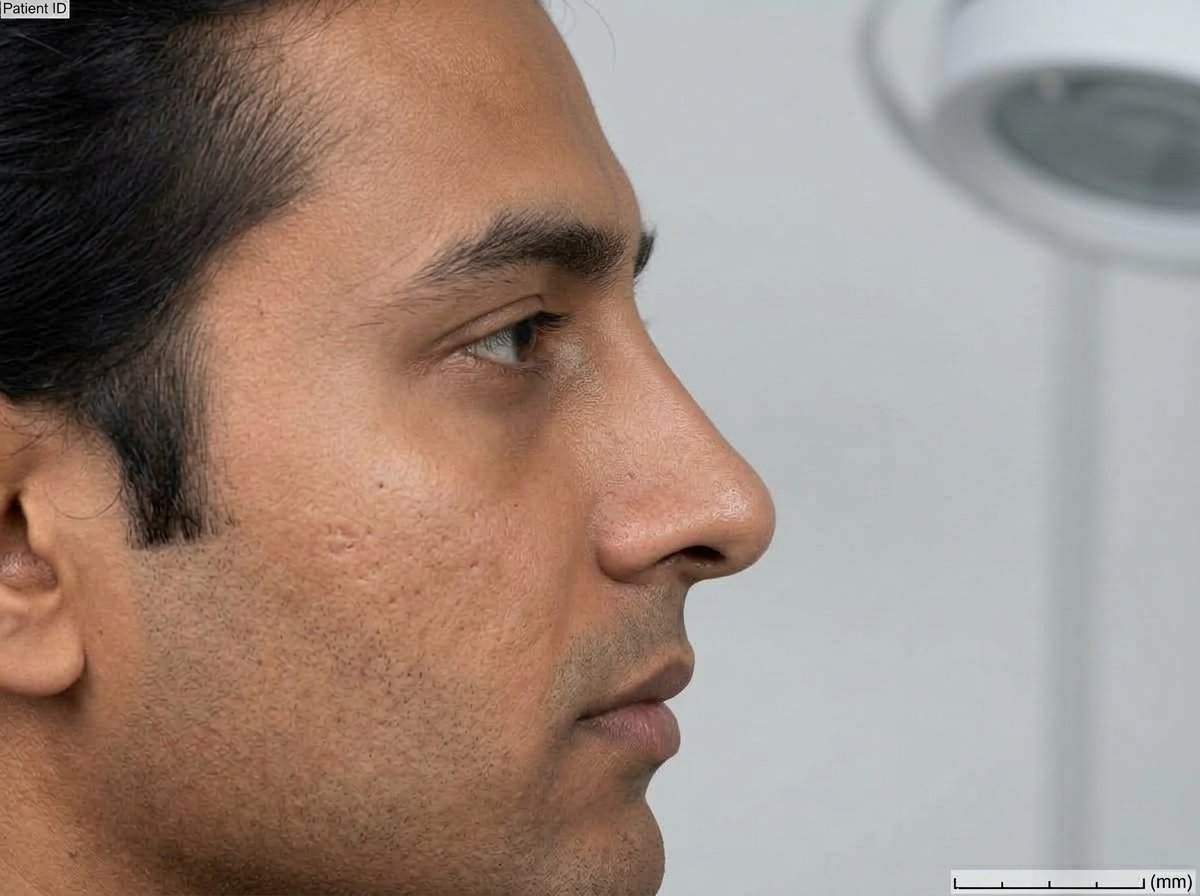 Post-Procedure Refined Profile
 Pre-Procedure Dorsal Hump
What Is Rhinoplasty?
Rhinoplasty is surgery to change the shape, size or structure of the nose.
Depending on the patient's individual requirements, surgery may address:
Reducing bony prominences or elevating flat, low nasal bridges for a graceful profile line.
Refining bulbous, drooping, wide, or asymmetrical cartilage structures at the nasal apex.
Narrowing excessively flared nostril bases (alar base reduction) and wide nasal bones.
Correcting deviated septa, internal nasal valve collapse, and post-traumatic deformities.
Triple Classification: Rhinoplasty can therefore be cosmetic (appearance refinement), functional (airway obstruction correction), reconstructive (post-injury or cancer tissue rebuilding), or a tailored combination of all three.

Natural-Looking Rhinoplasty
A successful rhinoplasty should complement the patient's existing facial features. Simply making the nose smaller does not necessarily produce a better result. The surgeon must consider how changes to one part of the nose affect the rest of the nasal framework and the overall appearance of the face.
Specialized Rhinoplasty Procedures
Every nose has distinct structural anatomy. Explore the specialized corrective techniques performed by Dr. Ashish Rai at ARC Plastic Surgery in Noida.
Rhinoplasty for a Dorsal Hump
A dorsal hump is a prominence along the bridge of the nose composed of bone and cartilage. Rhinoplasty reshapes and reduces the hump while maintaining structural nasal support and roof stability.
Rhinoplasty for a Deviated Nose
A crooked or deviated nose can result from natural developmental asymmetry, past trauma, or severe septal deviation. Reshaping involves repositioning nasal bones, cartilage struts, and supporting septal framework.
Tip Rhinoplasty (Nasal Tip Correction)
Focuses specifically on the lower third of the nose to refine bulbous, wide, drooping, asymmetrical, or poorly defined tips. Underlying alar cartilages are re-oriented, sutured, or grafted for ideal tip projection and rotation.
Alar & Nostril Correction
For patients concerned with flaring nostrils or an overly wide nasal base. Micro-excisions placed within the natural alar-facial crease reduce nostril width without creating an unnatural pinched look or compromising airway entry.
Rhinoplasty for a Wide Nose
A wide nose can originate from broad nasal bones, thick cartilage, thick soft tissue, or a wide nostril base. Precision lateral osteotomies reposition the nasal bones inward to create a more slender, refined dorsal line.
Rhinoplasty for a Flat Nasal Bridge
For patients with a low, flat nasal bridge seeking enhanced profile projection. Structural augmentation uses autologous cartilage grafts (septal, ear, or rib cartilage) to elevate the dorsal line naturally.
Rhinoplasty After Nasal Injury (Post-Traumatic)
Accidents, sports injuries, or nasal fractures frequently cause both cosmetic deformity (saddle nose, step-offs, crooked bridge) and functional airway obstruction. Post-traumatic rhinoplasty systematically reconstructs fractured bones, straightens the buckled septum, and rebuilds missing support framework.
Revision Rhinoplasty
Performed when a patient has previously undergone nasal surgery elsewhere and requires further aesthetic or functional correction. Requires super-specialist expertise due to altered cartilage, internal scar tissue, and compromised structural support.
Functional Rhinoplasty & Septorhinoplasty in Noida
A nose can appear normal externally while structural problems inside the nose cause persistent difficulty breathing. Functional rhinoplasty focuses on eliminating structural airway blockages.
Potential contributors to nasal breathing obstruction include:
The internal dividing wall is bent or displaced to one side, severely narrowing the nasal passage.
Weakness in nasal side-wall cartilages causing nostrils to collapse inward during inspiration.
Swollen internal tissue shelves that restrict airflow, often treated in conjunction with septal repair.
Scarring, structural narrowing, or loss of cartilage support following past injuries.
Rhinoplasty vs. Septoplasty vs. Septorhinoplasty: Septoplasty solely straightens the internal septum to improve breathing. Rhinoplasty reshapes external/internal structures. When a patient has both aesthetic concerns (such as a crooked bridge or dorsal hump) and breathing difficulty, they are combined as a Septorhinoplasty in a single operative session.
Comprehensive Functional Evaluation
At ARC Plastic Surgery, Dr. Ashish Rai conducts an anterior rhinoscopic and internal nasal valve assessment before planning surgery, ensuring aesthetic refinements never sacrifice breathing comfort.
Open vs. Closed Rhinoplasty
Neither approach is universally superior. The choice between open and closed rhinoplasty depends entirely on the patient's nasal anatomy and the complexity of corrections required.
Closed Rhinoplasty
All Incisions Placed Inside the Nostrils
- Incision Placement: Made exclusively within the nasal mucosa inside the nostrils.
- External Scar: Zero external incisions; completely invisible from the outside.
- Surgical Exposure: Limited direct visibility of complex tip cartilages.
- Swelling Profile: Often associated with slightly faster resolution of nasal tip swelling.
- Best Suited For: Straightforward dorsal hump reductions and minor bridge reshaping.
Open Rhinoplasty
Columellar Incision for Complete Framework Exposure
- Incision Placement: Internal incisions plus a tiny inverted-V cut across the columella.
- External Scar: Fades to a virtually imperceptible, natural hairline crease under the nose.
- Surgical Exposure: Complete binocular visualization of bone and cartilage framework.
- Surgical Precision: Unmatched control for complex structural reshaping and graft placement.
- Best Suited For: Crooked noses, tip refinement, structural grafting, and revision surgeries.
The Rhinoplasty Procedure
The exact surgical procedure differs from patient to patient, but rhinoplasty at ARC Plastic Surgery generally follows a meticulous, staged sequence.
Consultation & Assessment
Detailed evaluation of front, profile, and base views, skin thickness, and nasal airway.
Surgical Planning
Determining which structures need modification and whether surgery is cosmetic, functional, or both.
Anaesthesia
Performed under general anaesthesia in a modular laminar OT for complete patient comfort and safety.
Surgical Access
Careful incisions placed using the open or closed approach according to the surgical roadmap.
Structural Reshaping
Modifying bone, cartilage, septum, nasal tip, and nostrils to achieve desired proportions.
Structural Support
Placing cartilage grafts (spreader, columellar strut) when added stability or contouring is needed.
Closure, Splint & Dressing
Fine dissolving sutures close incisions, and an external protective nasal splint is applied to safeguard new contours during early healing.
Rhinoplasty for Men
Male rhinoplasty requires deep consideration of masculine facial balance and nasal anatomy. The objective is never to create a scooped, pinched, or overly upturned nose.
Rhinoplasty for Women
Female rhinoplasty focuses on softer, delicate contours that enhance facial elegance and eye expression.
Recovery After Rhinoplasty
Swelling and bruising around the eyes and nose are normal after surgery. Initial recovery takes approximately 10–14 days, while final subtle tip refinement continues to settle over several months.
Early Swelling
Nasal congestion and mild swelling peak. Sleep with head elevated. Cold compresses around eyes minimize puffiness.
Splint Removal
Nasal splint and external tapes removed comfortably by Dr. Ashish Rai. You can see the initial new nasal profile clearly.
Return to Routine
Most bruising resolves. Patients return to office desk jobs and light social activities. Major swelling subsides.
Final Definition
Subtle swelling around the nasal tip fully dissipates, revealing permanent, crisp, and natural nasal definition.
Post-Operative Recovery Guidelines
Adhere strictly to aftercare guidelines to protect your healing nasal framework:
Risks and Possible Complications
Like every surgical procedure, rhinoplasty carries potential risks. During your initial consultation, Dr. Ashish Rai will discuss all aspects of safety, expectations, and potential complications openly.
Surgical Excellence: Choosing a qualified plastic surgeon with extensive super-specialist experience (MCh Plastic Surgery) significantly mitigates risks through meticulous tissue handling and structural cartilage preservation.
Hospital-Grade Sterile Theatre
ARC Plastic Surgery features a dedicated modular laminar-flow operation theatre designed specifically for delicate facial plastic surgeries in Sector 104, Noida.
Why Choose Dr. Ashish Rai for Rhinoplasty in Noida?
Rhinoplasty is widely recognized as one of the most technically demanding operations in plastic surgery. Even a single millimeter alteration in bone or cartilage can fundamentally change both facial appearance and internal breathing dynamics.
At ARC Plastic Surgery, Dr. Ashish Rai (MBBS, MS, MCh Plastic Surgery, DNB) brings over 20 years of surgical experience. His approach harmonizes structural stability with aesthetic elegance:
Trained to correct external cosmetic contours while simultaneously optimizing internal breathing.
Utilizes autologous cartilage grafts to prevent post-surgical drooping, pinching, or valve collapse.
Crafts natural nasal proportions that look effortless and fit your unique facial bone structure.
Modern boutique facility offering private, unhurried, and completely confidential consultations.
Frequently Asked Questions About Rhinoplasty
Clear, evidence-based answers to help you understand nose job surgery, recovery, scars, and breathing benefits.
Rhinoplasty is surgery performed to reshape or reconstruct the nose and, when required, improve its breathing function. It can modify the nasal bridge, tip, width, nostrils, and internal septal support.
No. Rhinoplasty can be performed for cosmetic, functional and reconstructive reasons. Many procedures address both aesthetic appearance and airway obstruction in the same operation.
Yes. Functional rhinoplasty can address structural problems that contribute to nasal obstruction, including a deviated septum, enlarged turbinates, and collapsed nasal valves.
Rhinoplasty primarily reshapes the external and internal nasal structures for cosmetic or functional purposes, while septoplasty specifically straightens a crooked or deviated internal nasal septum to improve airflow.
Septorhinoplasty combines internal septal correction (septoplasty) with external nasal reshaping (rhinoplasty) to address both breathing function and structural cosmetic concerns simultaneously.
Neither approach is universally better. Closed rhinoplasty avoids an external cut and is suitable for minor bridge work, while open rhinoplasty provides comprehensive structural visualization, ideal for complex tip sculpting, crooked noses, and revision cases.
Yes. Depending on the cause, rhinoplasty straightens a crooked nose by carefully repositioning the nasal bones, straightening the septum, and balancing the underlying supporting cartilage framework.
Yes. A prominent dorsal hump can be carefully reduced and smoothed to create a straight, natural nasal profile line while preserving the middle nasal vault and breathing passage.
Yes. Tip rhinoplasty modifies the shape, projection, width, rotation, and definition of the nasal tip using specialized cartilage sculpting and suturing techniques.
The duration depends on the complexity of the procedure. A typical primary rhinoplasty takes approximately 1.5 to 3 hours, while complex revision or post-traumatic surgeries may take slightly longer.
Initial recovery takes about 10–14 days, after which splints are removed and most patients can comfortably return to desk jobs. While 80% of swelling resolves in the first month, final subtle tip definition settles over 6 to 12 months.
Closed rhinoplasty leaves no external scar. Open rhinoplasty involves a tiny incision on the columella between the nostrils that heals into an inconspicuous, virtually invisible fine line in the natural skin fold.
Yes. The structural changes made to the nasal bone and cartilage are permanent and intended to last a lifetime, though natural aging continues to affect facial tissues gradually over time.
Yes. Selected patients can undergo revision rhinoplasty to correct cosmetic or breathing issues remaining after prior surgery, though the procedure is more complex and requires careful cartilage assessment.
A good candidate is someone in good general health, who has completed facial growth (typically 16–18 years of age or older), has a clear concern about their nose shape or breathing, and possesses realistic expectations.
You should consult a board-certified plastic surgeon with specialized MCh qualifications and proven rhinoplasty experience. At ARC Plastic Surgery in Sector 104, Noida, Dr. Ashish Rai provides comprehensive evaluation of your nasal framework, facial proportions, and breathing function.